
By The One on One Team
Last Updated: 1/25/2026
Why Understanding the Purpose of Each Exercise Leads to Better Results
Our Back to Basics series is all about revisiting the foundational concepts that create the most effective exercise experience. This week, we’re highlighting one of the most important and often overlooked principles in training: knowing your “why” behind every exercise.
The Hidden Trap: Going Through the Motions
There’s a silent trap in training that doesn’t look like a trap at all. We call it going through the motions. It happens when you know how to perform an exercise, but don’t fully understand why it’s in your program. When this happens, you complete the reps, but miss the opportunity to create meaningful change.
Training with Purpose
At One on One, every aspect of a training session is intentionally designed to serve a specific purpose. Each component is crafted to create a stimulus that drives a specific physiological adaptation. When those adaptations are created consistently over time, they lead directly to your desired results.
Without understanding the purpose of each movement, from a ViPR Battering Ram to a Seated Low Row, you’re at a disadvantage in getting the full return on your time and effort.
The Building Blocks of a Training Session
Every training session includes a strategic combination of the following elements:
- Corrective Exercise
- Strength Training
- Endurance / Metabolic Conditioning
In this article, we’ll focus specifically on the logic behind Strength Training. In a follow-up article, we’ll review corrective exercise, movement preparation, and endurance/metabolic conditioning.
Understanding Strength Training
Strength training occurs in the body of your workout, once the body is prepared to engage muscles effectively and reinforce proper movement patterns. Each strength exercise can be categorized as either Traditional or Non-Traditional, and understanding the difference is key to purposeful training.
Traditional Strength Training
Traditional strength training exercises include movements such as squats, presses, rows, and deadlifts. The primary purpose of these exercises is to strengthen specific muscle groups.
When performing traditional strength exercises, it’s essential to direct your full attention to the target muscles from the first repetition to the last. The goal is not simply to complete the set, but to create a clear strength stimulus that leads to muscular adaptation.
Non-Traditional Strength Training
Non-traditional strength training exercises include movements such as ViPR Thread-the-Needle Squats, Anterior Reach to Hurdle, 3D Lunge Matrix, and ViPR Side Lunge Reach Back.
While these exercises may still involve resistance, their primary purpose is different. They are designed to improve balance, range of motion, coordination, and functional movement patterns, rather than to maximally load a single muscle group. When engaged in these exercises, focus your full attention on completing the motion with your maximum usable range of motion.
Similar Movements, Different Purposes: A Clear Example
Some exercises may look very similar on the surface, yet serve entirely different training objectives. A common example is the comparison between a Single Leg Deadlift and an Anterior Reach with Vipr.
Single Leg Deadlift
- Category: Traditional Strength Exercise
- Environment: Stable setup (e.g., foot on a ValSlide, reaching to a bench, or light support from a wall bar)
- Primary Focus: Strengthening the glutes and hamstrings
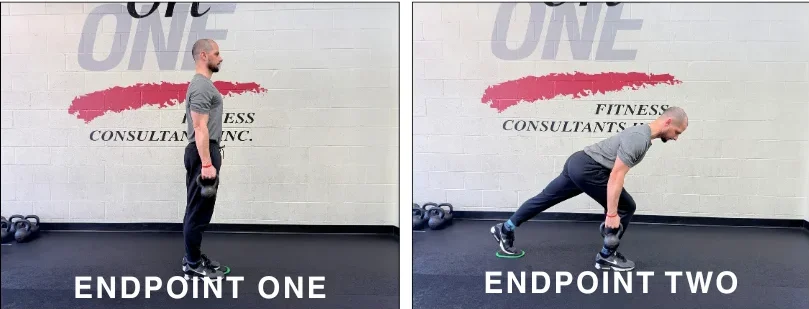
In this exercise, stability is intentionally supported so the body can focus on producing force and strengthening the target muscles.
Anterior Reach with Vipr
- Category: Non-Traditional Strength Exercise
- Environment: Unstable enough to challenge balance while maintaining control
- Primary Focus: Range of motion
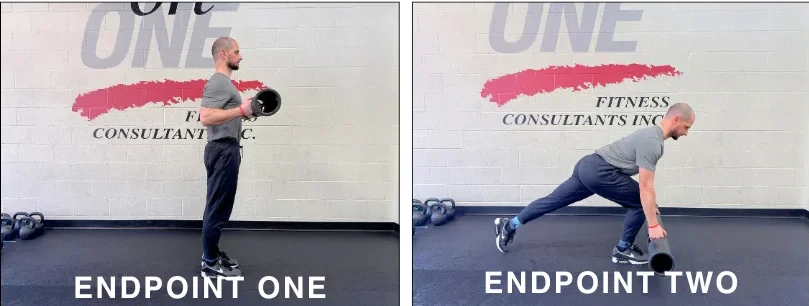
Here, the challenge is not maximal muscle loading, but the body’s ability to maintain balance and control through a full range of motion.
Understanding this distinction ensures that your attention and effort is aligned with the intended outcome of each exercise.
Putting It Into Practice
During your training sessions this week, consider the following:
- Do I know why this exercise is in my program?
- Am I directing my attention toward the right objective—strength, balance, mobility, etc?
Moving forward, let’s be sure to understand the “why” behind every movement. By gaining ownership over your training experience, you’ll avoid going through the motions and open the door for greater results.