
By The One on One Team
Last Updated: 11/6/2026
How to Squat Properly: Technique and Common Form Mistakes
Nearly every program at One on One includes some variation of a squat, and for good reason. Squatting is one of the fundamental movement patterns we use in daily life. Every time you stand up from a chair, climb stairs, or lower yourself to pick something up, you rely on the mobility, stability, and strength required to squat.
A well-executed squat requires coordinated movement through the ankles, knees, and hips while maintaining stability through the trunk. Training this pattern helps develop lower body strength, maintain joint mobility, and improve your ability to perform everyday activities safely and effectively.
In this article, we’ll review how to perform a traditional squat using our Three Keys for Proper Exercise Form.
Applying Our Three Keys for Proper Exercise Form
Key #1: Setup and Endpoints
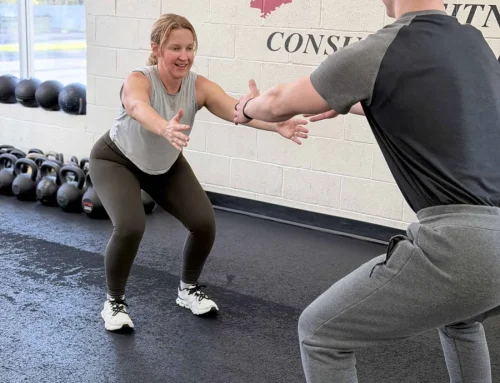
Begin standing with your feet approximately shoulder-width apart and your toes pointed slightly outward.
Initiate the squat by bending through your hips, knees, and ankles, lowering your hips toward your heels. Allow your knees to travel forward over your toes while keeping your heels firmly planted on the floor. Your knees should remain aligned with your hips and ankles throughout the movement.
Your bottom endpoint is the greatest depth you can reach while maintaining proper alignment and control. This will vary from person to person based on mobility, stability, and strength.
Your top endpoint is a tall standing position with your hips and knees fully extended.
The goal is to move through your greatest available range of motion while respecting your individual endpoints. Squatting deeper is only beneficial when you can maintain proper form throughout the movement.
Key #2: Maintain a Capital “I”
Throughout the squat, your torso should resemble a capital “I.” Your shoulders and hips should remain level, and your spine should maintain its natural alignment.
As you lower into the squat, your torso will naturally lean forward to accommodate movement at the hips, knees, and ankles. Ideally, your spine will remain relatively parallel to your shins while maintaining a long, neutral position.
Avoid allowing your capital “I” to become shorter, rounded, or excessively arched. Maintaining this alignment allows the legs to produce force while the trunk provides stability.
Key #3: Limit Leaks
Squatting requires mobility, strength, and coordination. When one of these qualities is limited or becomes fatigued, the body will often compensate to complete the movement. These compensations, or “leaks,” reduce the effectiveness of the exercise and can place unnecessary stress on the joints.
The most common leaks we see during squats include:
- Allowing the knees to collapse inward or excessively bow outward
- Lifting the heels off the floor
- Leaning excessively forward through the torso
- Rounding the lower back or excessively tucking the pelvis at the bottom of the squat
- Losing control at the bottom of the movement and bouncing back up
Final Thoughts
Squatting is one of the most valuable movement patterns we train because of its direct application to everyday life. Whether you’re performing a bodyweight squat or a heavily loaded variation, the fundamentals of proper execution remain the same.
The next time you squat, focus on establishing your setup and endpoints, maintaining a strong capital “I,” and limiting leaks throughout the movement. Consistent attention to these details will help you build strength and improve your ability to move safely and effectively.
Copyright 2026 Fitness Consultants Inc. All rights reserved.