
By The One on One Team
Last Updated: 3/19/26
How to Prevent Back Pain During Gardening, Golf, and Outdoor Activities
As the days grow longer and temperatures begin to rise, many individuals look forward to returning to outdoor activities such as gardening, golfing, tennis, and long days spent maintaining their property. While these activities are enjoyable and beneficial for overall health, they also introduce a sudden increase in physical demand. For many active aging adults, this seasonal transition is not without consequence. Early spring is one of the most common times of year for back discomfort and strain.
A Common Seasonal Challenge
A familiar scenario unfolds each year. After a less active winter, individuals enthusiastically return to outdoor work and spend extended periods of time bending, lifting, and reaching. Within days, and sometimes even hours, stiffness begins to set in. For some, this progresses into more significant pain that limits activity altogether. Despite good intentions, the body is often unprepared for both the volume and the specific types of movement required for outdoor activities.
Why This Happens: Understanding the Spine
The spine is made up of a series of joints designed to share movement and load. When functioning well, these joints move together in a coordinated manner, distributing stress evenly across the spine and the muscles that support it. Over time, however, inactivity and poor posture can create imbalance. Some areas lose mobility, while others begin to take on more movement than they are designed to handle.
When activity increases suddenly, this imbalance becomes more apparent. Instead of forces being shared across multiple joints and muscle groups, they become concentrated in specific areas. This often leads to localized irritation, stiffness, or strain.
Outdoor activities further contribute to this challenge. They are typically repetitive, performed for long durations, and place the body in sustained positions such as bending or reaching. Without proper movement mechanics and sufficient muscular endurance, particularly from the hips and core, the spine is left to absorb more load than it should and the risk of injury increases.
Preparing Your Body for Seasonal Demands
The good news is that this outcome is not inevitable. With the right preparation, the body can be well-equipped to handle these seasonal demands safely.
Here are some specific areas to focus on to get set up for success:
Strengthen the glutes:
The glute muscles play a key role in movements such as lifting, carrying, and transitioning between positions. When they are strong, they allow you to generate force through the hips rather than the lower back. This shifts the workload away from the spine and into the larger, more capable muscles of the lower body.
Recommended exercises: Glute bridge, deadlift, hip thrust, single-leg deadlift
Strengthen the core:
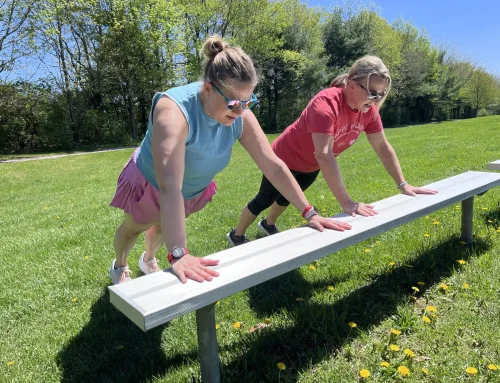
The core stabilizes the spine during movement, particularly when lifting and rotating. Its role is to maintain a stable, neutral position so that forces can be transferred efficiently between the upper and lower body. Be sure to maintain a neutral spine when performing core exercises to avoid feeding any dysfunctional movement patterns.
Recommended exercises: Plank variations, half-kneeling cable chops, dead bugs, torso rotations
Ready to get prepared for spring activities?
Click here to download a program that will set you up for success.
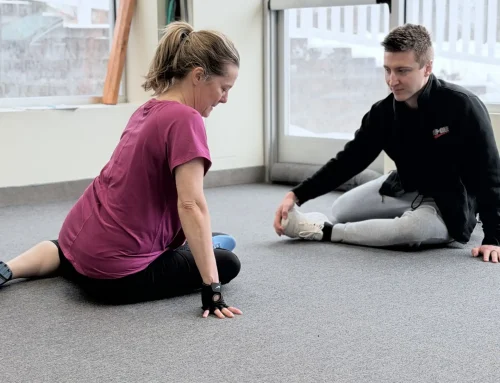
Mobilize the hips:
Adequate hip mobility allows for proper hinging, squatting, and rotational movements. When the hips are restricted, the body compensates by increasing motion through the lower back. Improving hip mobility allows you to access necessary positions more comfortably while reducing the demand placed on the spine.
Recommended exercises: Foam roll hip flexors and glutes, half-kneeling hip flexor stretch, pigeon pose, 3D stretch matrix, world’s greatest stretch
Mobilize the thoracic spine:
The thoracic spine, or upper back, is designed to rotate. When this area becomes stiff, rotational demands are transferred to the lower back, which is not well-suited for twisting motions.
Recommended exercises: Foam roll thoracic spine, pecs and lats, doorway pec stretch, side-lying rotations, cat/dog
Conclusion
Seasonal increases in activity do not have to lead to discomfort or injury. By understanding how back issues develop and preparing the body accordingly, individuals can better position themselves for success.
In Part 2, we will focus on how to move during these activities to further reduce stress on the spine and improve comfort throughout the day.